


Sensing & Communications with Airborne Platforms
Summary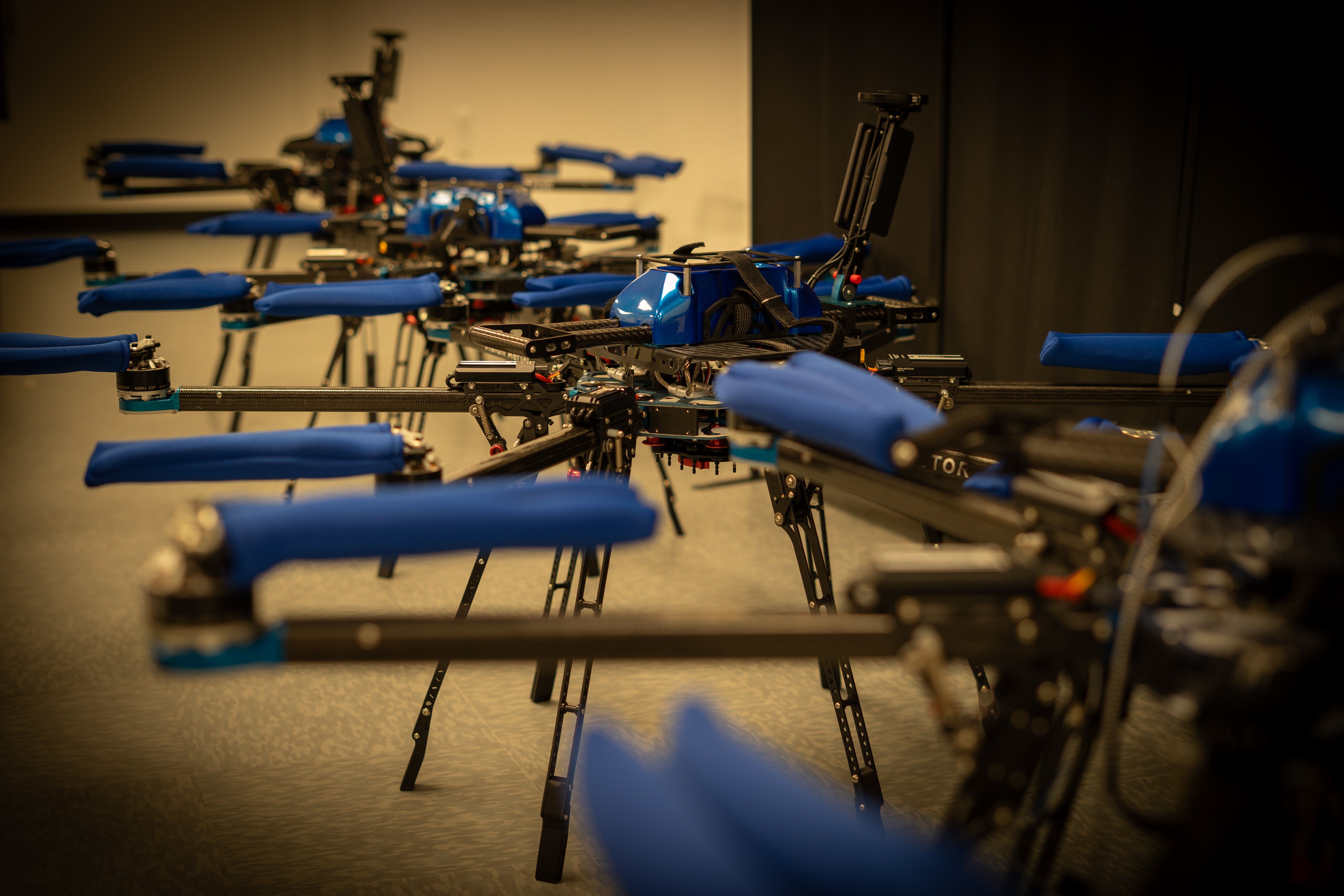
Free-space optical (FSO) links can replace static fibers for optical communication by propagating information on laser light through the air. This provides many benefits relative to radio frequency (RF) transmissions such as higher data throughput, quantum communications, lower chances of interception, and propagation for considerably longer ranges. The benefits over fiber include rapid deployment as well as dynamic, rearrangement with minimal infrastructure modification required. Most FSO links are large devices that cannot be place don unmanned airial vehicles (UAVs), We are developing low size, weight, and power (SWaP) FSO payloads for UAVs to enable rapid deployment, reconfigurable geometry, and high data throughput.
Capabilities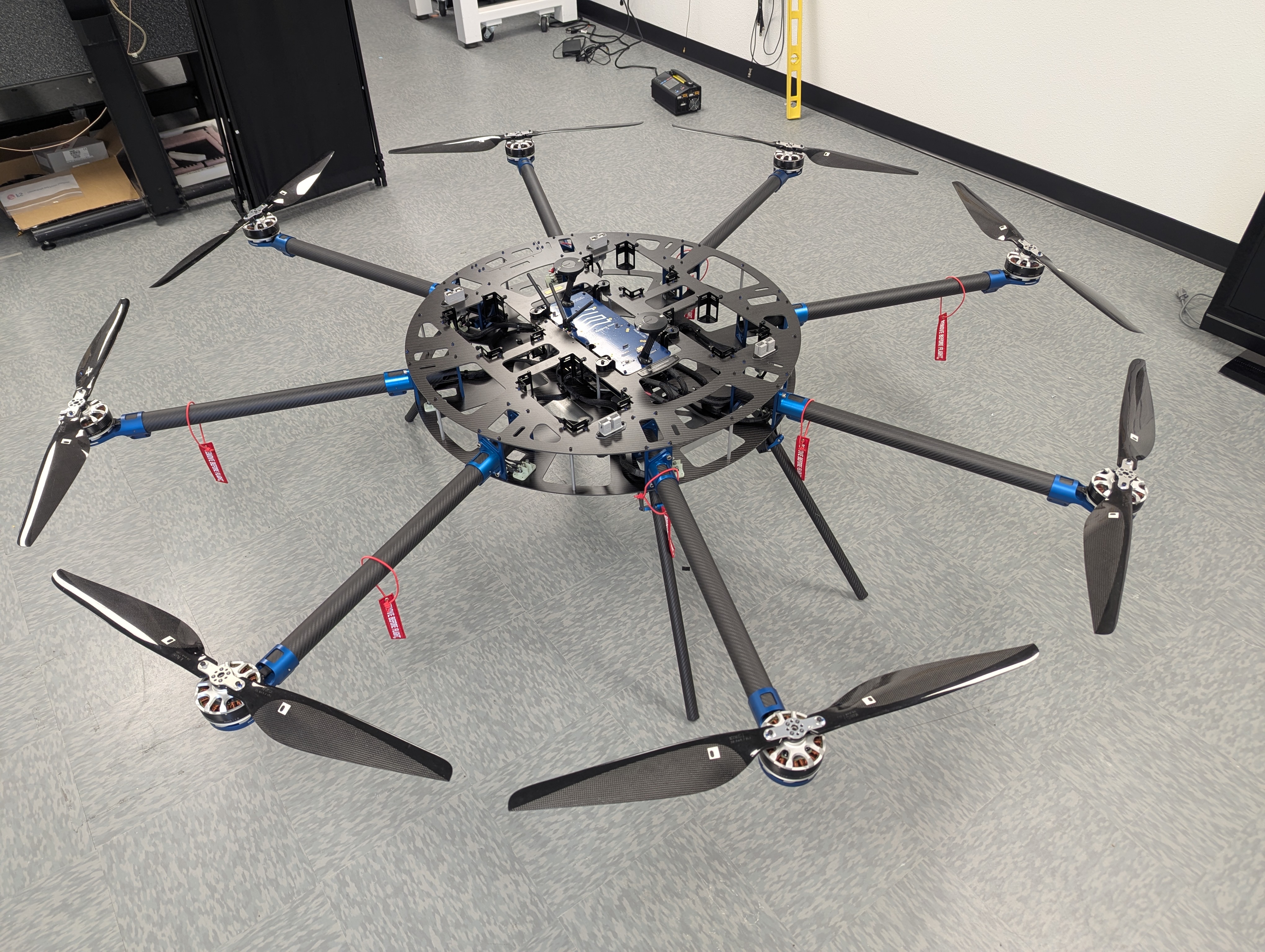
At Spectrum Lab we maintain several drones fitted for mounting optical payloads, along with a zepplin and a hangar for storage and integration. These platforms let us evalue pointing, aquisition, and tracking on a moving terminal under realistic atmospheric conditions. For example, we have demonstrated optical locking using a fast scanning mirror (FSM) for fast alignment of optical beams to airborne targets. We have used this link to sentd commercial ethernet-over-fiber data through the air, demonstrating a preliminary airborne optical communication system.
Personnel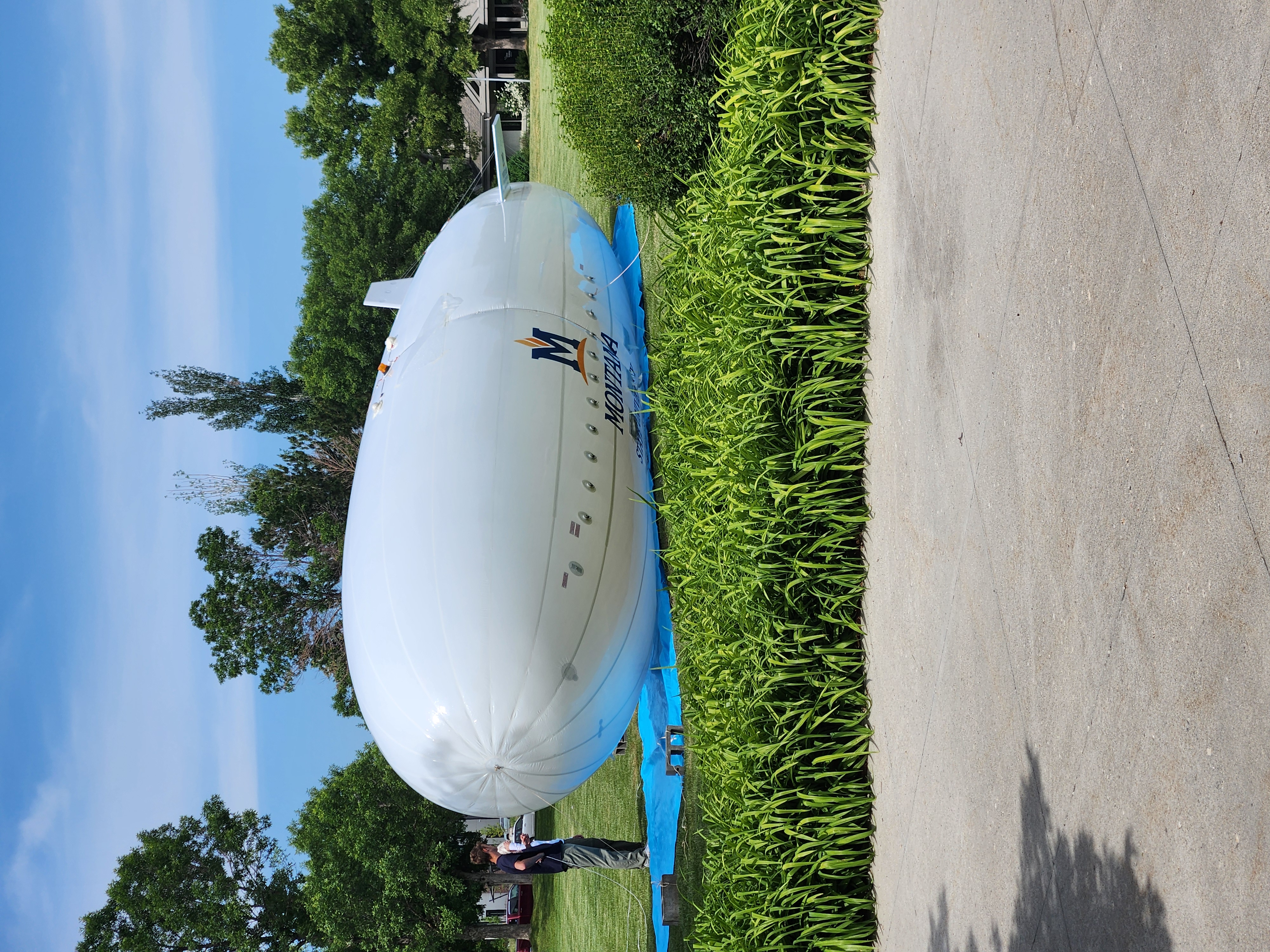
Trent Jackson (trent.jackson2@montana.edu)
Dr. Dennis Dempsey (dennis.dempsey@montana.edu)