


Quantum Networking Hardware
Summary
 Before the adoption of the internet, computers were viewed as scientific instruments
and had limited uses for all but the most dedicated hobbyists. Once the ability to
interconnect multiple devices was unlocked, computers became an essential tool for
everyday life.
Before the adoption of the internet, computers were viewed as scientific instruments
and had limited uses for all but the most dedicated hobbyists. Once the ability to
interconnect multiple devices was unlocked, computers became an essential tool for
everyday life.
Quantum technology is following this same trend. Currently most quantum devices require laboratory environments and complex setups, which can’t be deployed into real world environments, and it is difficult to send the fragile quantum information to multiple users. Uncrackable security, precision sensing of electromagnetic and gravitational fields, unprecedented computational speeds, and far more undiscovered applications will become possible when quantum networks can connect individual quantum devices.
Our group explores and develops all aspects of quantum networking hardware. Unique multi-user entangled photon sources across a wide range of wavelengths, signal processing systems to manipulate the spectral and temporal properties of quantum states, and receivers to extract the quantum information after propagation through a network have all been built in-house with the intention of deploying them into real optical networks.
Capabilities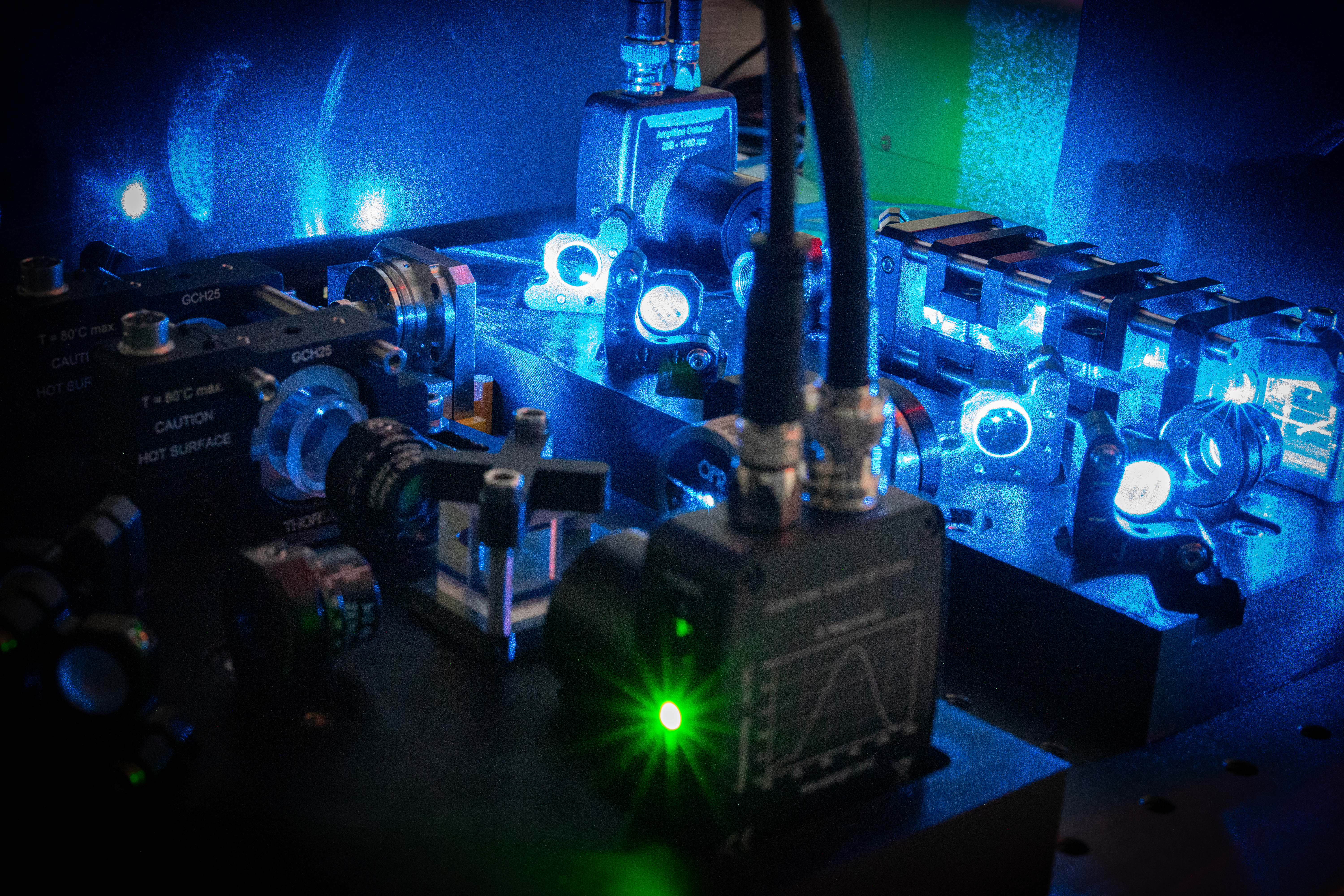
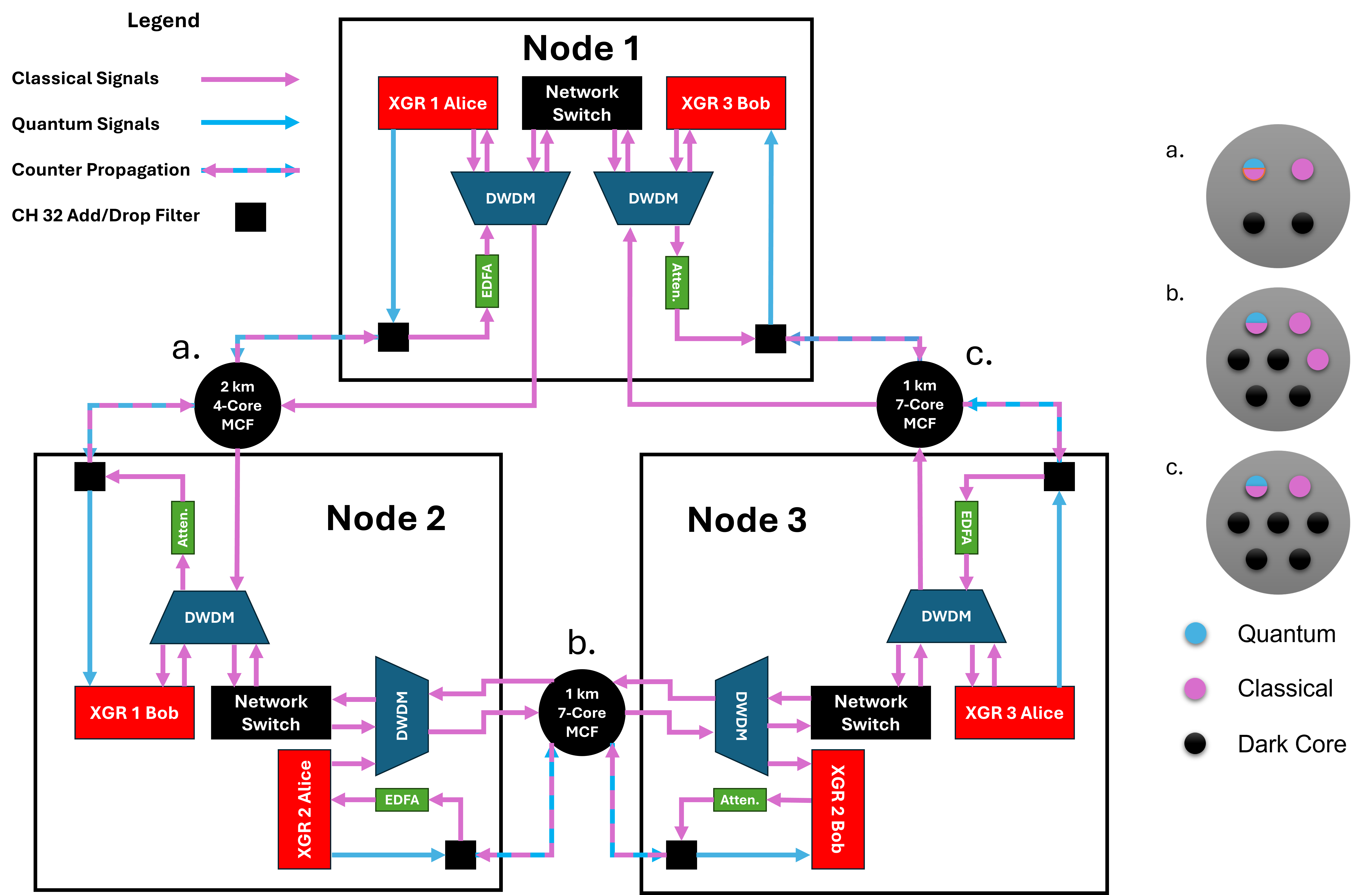
At Spectrum Lab, we have access to multiple state-of-the-art entangled photon sources across a wide range of wavelengths. We have a mix of commercial and in-house developed systems that utilize different pair generation mechanisms (spontaneous four-wave mixing and spontaneous parametric down conversion) to determine what type of photon is best suited for a given application. We also have access to a three-node hybrid quantum classical network connecting three research facilities over multiple kilometers of multi-core fiber, allowing for the testing of different network protocols, entanglement transport techniques, and quantum signal processing routines. We work closely with the Rare Earth Ion Quantum Devices subgroup and have access to cryogenic systems allowing for the exploration of light-matter interactions with bulk crystal materials to function as quantum memories, repeaters, and signal processors.
Personnel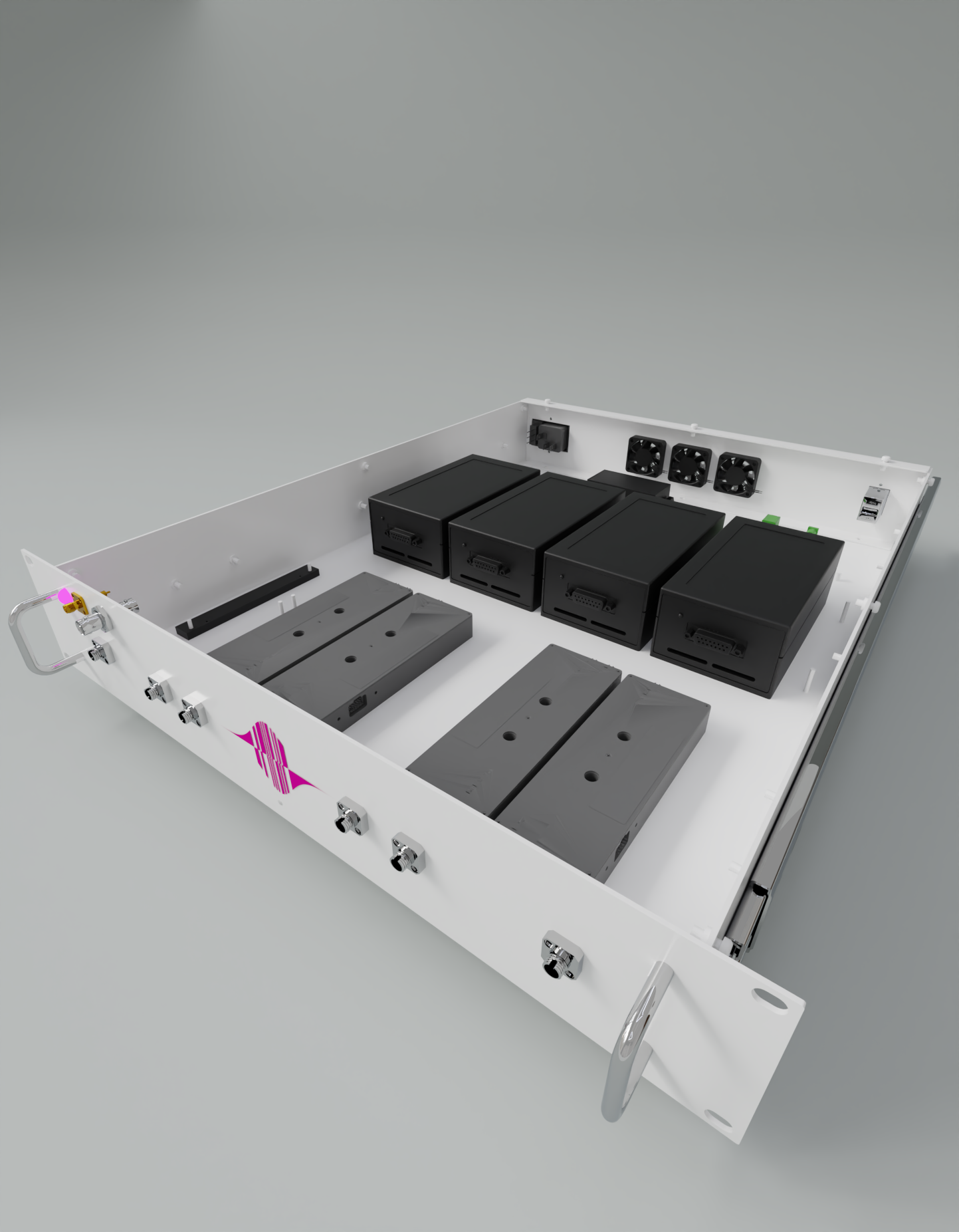
Dr. Joshua Dugre (joshuadugre@montana.edu)
Dr. Owen Wolfe (owen.wolfe@montana.edu)
Nathan Kuehl (nathan.kuehl2@montana.edu)
Ector Ayala Diego (ectorayala@montana.edu)
Samuel Fritsch (samuelfritsch@montana.edu)
Graduate Researchers
Grant Kirkland
Undergraduate Researchers
Ansel Spitler
Publications
-
Joshua Dugre, Samuel Fritsch, and R. Krishna Mohan, "Demonstration of a three-node wavelength division multiplexed hybrid quantum-classical network through multicore fiber," J. Opt. Commun. Netw. 17, 71-80 (2025)